

Jamaican Cuisine: A Flavorful Goldmine for Personal Chefs
As a personal chef, your ability to stand out and attract premium clients often comes down to offering something bold, exciting, and unforgettable. That’s where the vibrant, flavor-packed, and soul-stirring world of Jamaican cuisine comes in. This isn’t just about adding a tropical twist to your menu—it’s about mastering a culinary tradition that’s as rich in culture as it is in opportunity, and one that can take your business to the next level.
Jamaican cuisine is a celebration of bold spices, fresh ingredients, and dishes that are as colorful as the island itself. Imagine serving your clients a perfectly seasoned plate of jerk chicken, smoky and spicy, paired with a side of fragrant rice and peas.
Picture the rich, savory flavors of oxtail stew, slow-cooked to tender perfection, or the refreshing sweetness of a tropical mango salad. These aren’t just meals—they’re experiences that transport your clients to the sun-drenched beaches and lively markets of Jamaica. And when you can deliver that kind of authenticity, you’re not just a chef—you’re a culinary artist. And artists like this command premium rates.
What makes Jamaican cuisine even more exciting is its versatility and universal appeal. Whether your clients are craving hearty, meat-forward dishes, lighter options like ackee and saltfish, or indulgent desserts like rum-soaked bread pudding, Jamaican food offers something for every palate.
Its emphasis on bold, spicy flavors and vibrant presentation also makes it a hit with clients who value both taste and aesthetics—two key ingredients for creating a dining experience that feels truly special.
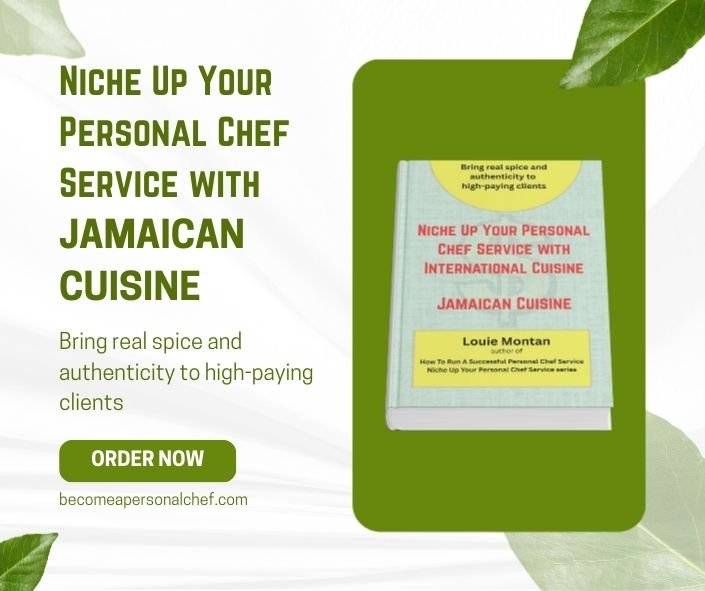
And here’s the opportunity: While Jamaican cuisine is beloved in the Caribbean, it’s still a relatively untapped niche in many markets. By mastering these flavors and techniques, you position yourself as a chef who brings something truly unique to the table—something clients will rave about, remember, and rebook for.
So, why should you care? Because Jamaican cuisine isn’t just a culinary tradition—it’s a business opportunity. It’s a way to stand out, attract discerning clients, and build a reputation as the chef who delivers extraordinary, one-of-a-kind dining experiences. Ready to turn jerk chicken and oxtail stew into a recipe for success? Let’s get started.
Table of Contents
ToggleKey Ingredients in Jamaican Cuisine
Jamaican cuisine is a delightful medley of flavors, heavily influenced by the island’s multicultural history. Central to this cuisine are ingredients like saltfish, Scotch bonnet peppers, pimento (also known as Jamaican allspice), thyme, scallions, garlic, and various other spices. Beans, rice, coconut milk, and a variety of fruits and vegetables also feature prominently.
Sourcing Ingredients and Finding Substitutes
Most ingredients used in Jamaican cuisine can be found in local supermarkets or specialty food stores. If certain ingredients like Scotch bonnet peppers or specific Jamaican spices are hard to find, consider using substitutes that offer a similar flavor profile.
Traditional Cooking Methods
Jamaican cooking methods often involve grilling, roasting, or stewing. The island is particularly famous for its jerk seasoning and cooking method, where meats are marinated in a spicy mixture then slow-cooked over pimento wood[^6^].
Taste Profile and Dominant Flavors
Jamaican cuisine offers a balance of robust, savory flavors with a hint of sweetness and spice. While some dishes feature a kick from Scotch bonnet peppers, the overall cuisine is not intensely spicy2. Adjusting the spice level to suit your client’s preference should not significantly alter the dish’s authenticity.
Cultural Significance and History
Jamaican cuisine reflects its rich cultural history, influenced by indigenous Taino people, Spanish colonizers, African slaves, and Indian and Chinese immigrants. Each dish tells a story of the island’s past and its multicultural heritage.
Dietary Restrictions and Allergies
Given the heavy reliance on seafood and various meats, chefs should be mindful of potential allergies and dietary restrictions. However, with the widespread use of vegetables, grains, and legumes, there are plenty of delicious Jamaican dishes that cater to different dietary needs.
Health Factor and Modifications
While some Jamaican dishes can be rich due to the use of meat and oils, many others feature nutrient-dense ingredients like beans, vegetables, and grains. As a personal chef, you can make healthier versions of traditional dishes by controlling the amount of oil and salt used.
Traditional Accompaniments
Jamaican meals are often accompanied by side dishes like rice and peas, fried plantains, or johnnycakes (fried dough). Popular beverages include rum punch and Red Stripe beer[^7^].
Presentation and Serving
Jamaican food is traditionally served family-style, with communal dishes placed in the center of the table. This approach encourages sharing and enhances the social aspect of dining.
Variations and Special Equipment
Regional variations are common in Jamaican cuisine, reflecting the island’s diverse geography and cultural influences. No specific equipment is needed beyond what is typically found in a well-stocked kitchen.
Pre-preparation and Personal Preferences
Some elements of Jamaican cuisine, like marinating meats or soaking peas, require advance preparation. Always consider your client’s personal preferences and dietary needs to ensure a satisfying dining experience.
So, put on your chef’s apron, and let’s explore the rich flavors and traditions of Jamaican cuisine!
