


Key Ingredients in Ethiopian Cuisine
Ethiopian cuisine is known for its distinct flavor profile, largely due to the unique combination of spices and ingredients. Some key ingredients include:
- Berbere: A spice mix made from chili peppers, garlic, ginger, fenugreek, and various other spices1.
- Niter Kibbeh: A spiced clarified butter that adds depth and richness to dishes2.
- Teff: A fine grain used to make injera, a sourdough-risen flatbread with a slightly spongy texture1.
- Mitmita: A hot spice blend often used in meat dishes3.
- Fenugreek and Cardamom: These spices are commonly used in Ethiopian cooking4.
- Onions and Garlic: These are foundational ingredients for many dishes5.
Sourcing Ingredients and Finding Substitutes
Most of these ingredients can be found in African or international grocery stores or online. If certain ingredients are hard to find, substitutes can sometimes be used. For instance, a combination of spices can be used as a substitute for berbere, although it may slightly alter the flavor.
Traditional Cooking Methods and Taste Profile
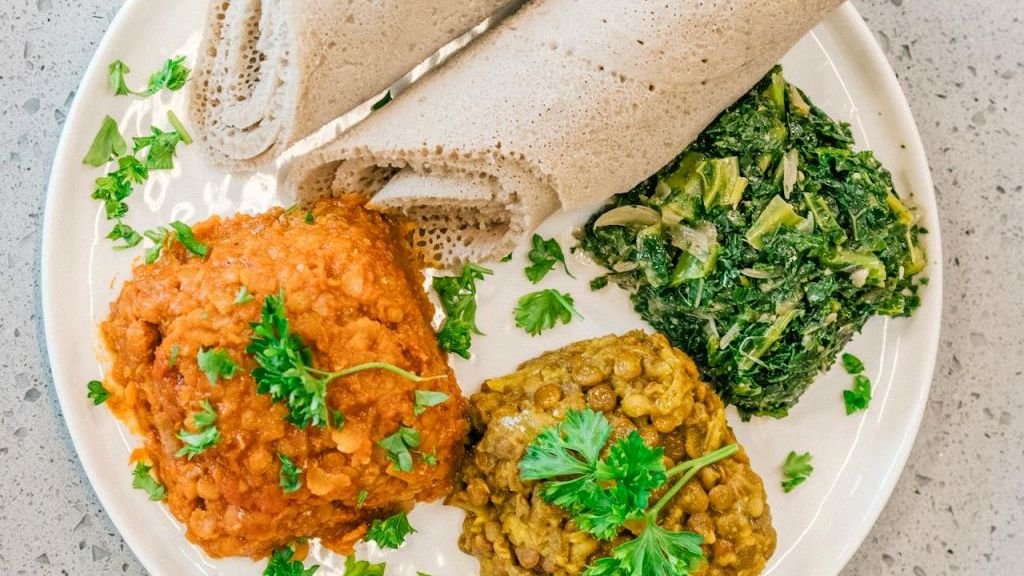
Ethiopian cuisine employs a variety of cooking methods, with a significant emphasis on slow-cooked stews (wats). The dominant flavors are a balance of spicy, sweet, and savory. While many dishes are spicy, the level of spice can be adjusted to suit your client’s preference.
Cultural Significance and Dietary Considerations
Ethiopian cuisine reflects the country’s diverse cultural heritage, with influences from various ethnic groups. The shared meal served on injera is a strong social tradition. When preparing Ethiopian dishes, consider potential dietary restrictions. Many dishes can be adapted to suit vegetarian or vegan diets.
Health Considerations and Accompaniments
While Ethiopian cuisine features fresh ingredients and lean meats, it also includes hearty, rich dishes that should be enjoyed in moderation. Traditional accompaniments include injera, a variety of wats (stews), and salads.
Presentation and Preparation
Ethiopian dishes are typically served family-style, with several shared dishes placed on a large piece of injera. Some dishes, like doro wat (chicken stew), require advance preparation due to slow cooking times6.
Personalizing Ethiopian Cuisine
As a personal chef, you can personalize each dish to suit your client’s preferences. Whether they prefer less heat, a different protein, or a vegetarian version, there’s plenty of room for modification while still maintaining the authentic flavors of Ethiopian cuisine.
So, are you ready to take your clients on a culinary journey to Ethiopia? With its complex flavors and rich cultural history, Ethiopian cuisine is sure to impress!
